Dubai's Datecrete, a material made from date pits, wins a Dezeen Award
Datecrete, a cement-free building material made from date pits by Dubai's Datecrete Studio & Lab, won sustainable design at the 2026 Dezeen Awards and the public vote for material innovation.
Dubai
A building material made in the UAE from the stones of dates has won one of the design world's best-known prizes. Datecrete, developed by the Dubai-based Datecrete Studio & Lab, was named the winner of the sustainable design category at the 2026 Dezeen Awards this month, and also took the public vote for material innovation of the year.
Datecrete is made from ground date pits mixed with a natural binder, with no cement, resins or petrochemicals. It can be poured into moulds and sets into something that looks and feels like stone or concrete. That matters in a country where dates are everywhere: the UAE eats an estimated 100,000 to 180,000 tonnes of dates a year, according to International Nut & Dried Fruit Council figures compiled by Statista, and the pits have usually been thrown away.
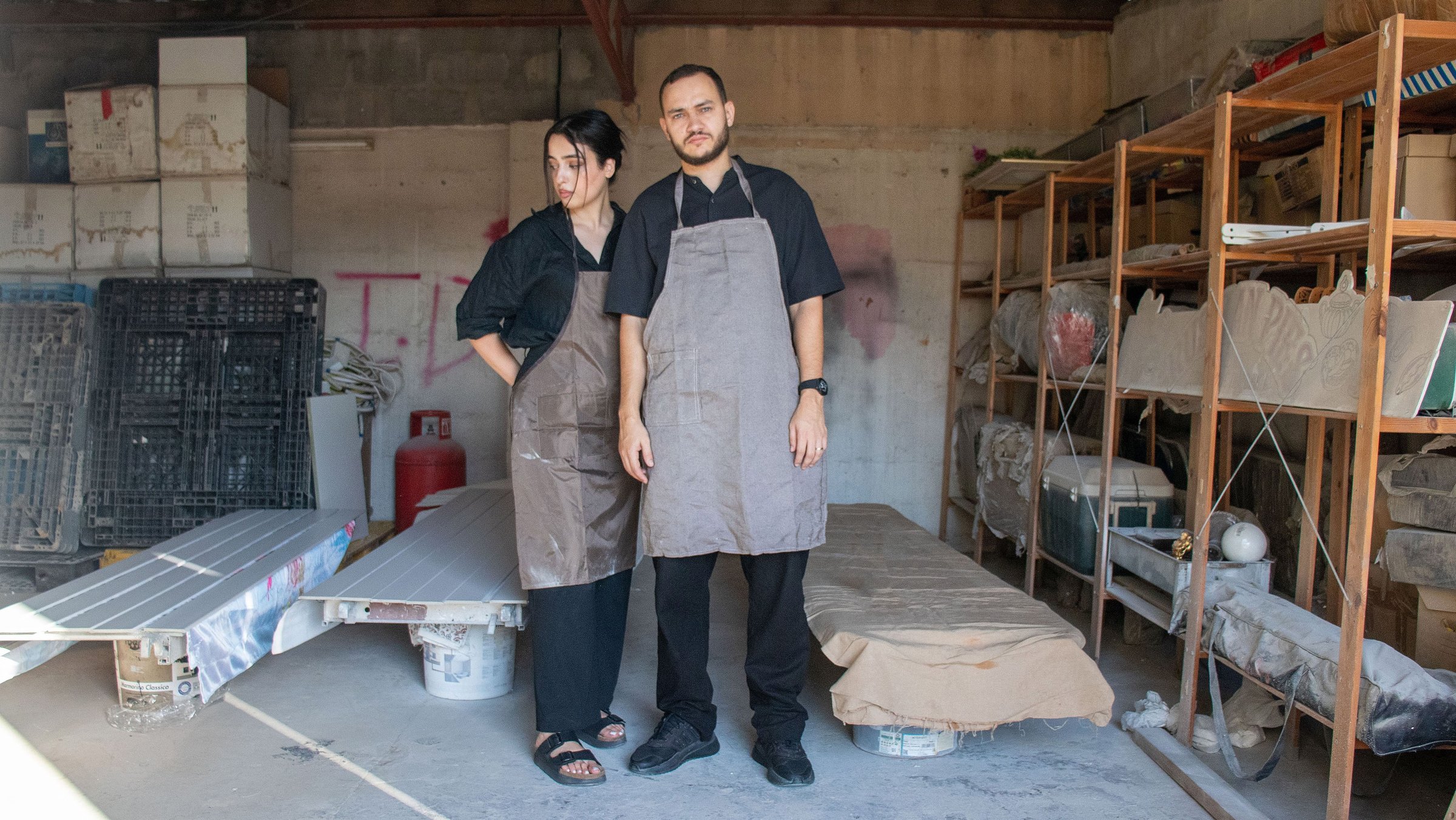
The studio was founded by Sara Farha, a Palestinian urban planner and material researcher, and Khaled Shalkha, a Lebanese chemical engineer who also works on energy policy. The couple both grew up in the UAE and started researching date pits in 2021. Their starting point, they told The National, was that date pits contain lignocellulosic compounds, the same family of materials found in wood. After about four years of tests and prototypes, they had a mix they could produce at scale.
The process is slow and done by hand. The pits are collected, cleaned, dried, sorted by size and ground, then combined with a patent-pending binder that draws on old building methods from the region. The mix hardens through a chemical reaction, without being fired in a kiln, and each piece is cured, sanded, polished and finished. The founders say the material keeps absorbing carbon dioxide over its life and is lighter than ordinary concrete, though still heavy. Surfaces can be left raw or given a range of coloured finishes.
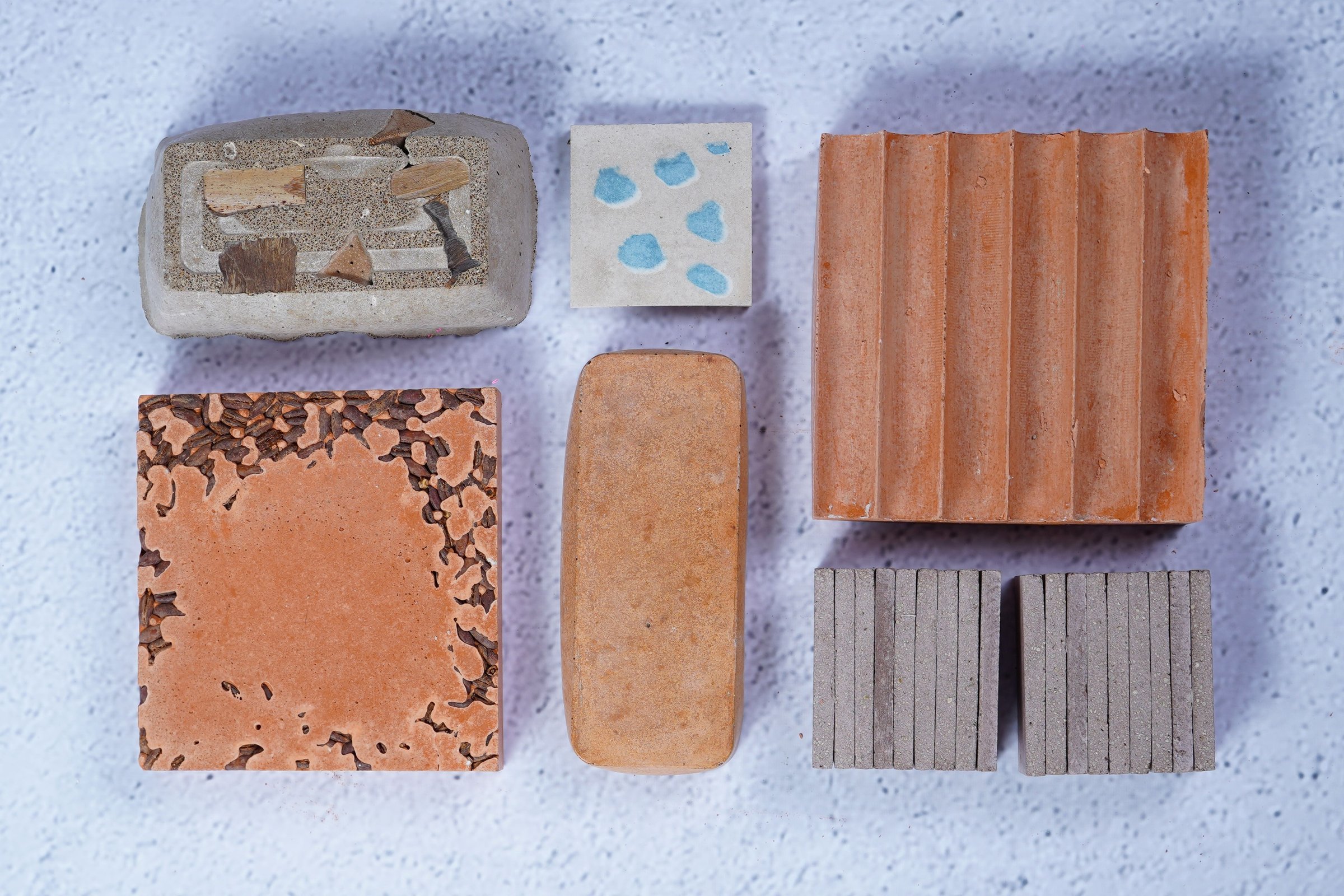
The first big test came at Expo 2025 Osaka, where the studio supplied 35 tonnes of paving for the landscape around the UAE Pavilion. The paving lasted the full six months of the Expo and is now being reused by a Japanese architecture office. Since then the studio has made tiles, pavers, wall panels, furniture such as its Accent Chair, sculptural objects and paving shaped like palm fronds.
The Dezeen win follows a run of recognition. In October, Datecrete was one of 40 finalists at the Seoul Design Award 2026 and received one of three designboom Special Prizes there. Earlier, the studio won the Christo and Jeanne-Claude Award and an Art Jameel Research and Practice Platform Grant. "We would like it to be seen more as a validated, real material category," Farha told The National.
The founders say the next step is to move from one-off commissions to large architectural projects, mainly tiles, cladding and modular systems for buildings. They also see the method working in other countries with plenty of plant waste of the same kind, which would turn a local leftover into a local building material.
For anyone building, renovating or designing in the UAE, Datecrete is already on sale through the studio's own website, datecrete.com. The studio sells a sample box with up to 13 textures and finishes for US$65, delivered in two to three weeks, and takes orders for tiles, pavers, panels, furniture and custom formats. Finishes include misted yellow, sienna, brick red, chocolate, emerald green, steel blue and charcoal, in matte or gloss. Prices for larger orders are not published, so architects and homeowners need to contact the studio for a quote.